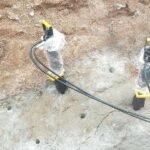
What Are the Common Operation Problems On Rock Splitters?
Rock Splitter operation problems can turn a normal rock-breaking shift into downtime, warranty arguments, and schedule pressure. In my after-sales work with hydraulic rock splitter users, I see many symptoms blamed on “machine defects” too early. A better solution is to identify oil, power unit, lubrication, hoses, and drilling conditions step by step.
Common operation problems of rock splitter include unstable pressure of rock splitter, failure to reach rated pressure about power unit, motor overheating, scratched wedges, hose leakage, low hydraulic oil level, faulty pressure gauges, and poor splitting caused by shallow drilling. Most cases should be checked through a risk-identification process before judging the rock splitter as defective.
I usually tell customers to treat each symptom like a field investigation. The goal is not to find someone to blame. The goal is to find the first weak point that creates risk, then confirm whether the issue comes from operation, consumables, power supply, maintenance, or equipment quality.
How Should Buyers Judge Rock Splitter Operation Problems First?
Rock Splitter operation problems become expensive when teams skip basic checks and start dismantling parts too soon. This creates confusion, delays spare-part decisions, and may even damage good components. I prefer a simple sequence that separates hydraulic, electrical, drilling, lubrication, hose, and instrument risks before deeper diagnosis.
The best first step is to identify the problem by system. Check hydraulic oil condition and level, inspect hose connections, confirm power unit supply stability with qualified electricians, review drilling depth, verify lubrication, and compare the pressure gauge reading with actual machine behavior. This method reduces wrong warranty claims and unnecessary downtime.
Start With a System-Based Checklist
In customer feedback, the same complaint can have several causes. For example, “the splitter has no power” may mean low hydraulic pressure, a blocked oil nozzle, a damaged hose, a wrong hole depth, or a faulty pressure gauge. I have seen teams replace parts before checking oil quality. That approach wastes time.
A practical field checklist should move from simple, visible items to more technical items:
-
Hydraulic oil
- Check oil level.
- Check whether the oil is emulsified, dark, oxidized, or contaminated.
- Confirm whether the specified anti-wear hydraulic oil is used.
-
Oil pipe interfaces
- Clean the pipe interfaces before reconnection.
- Check whether dust, sand, or metal particles entered the joint.
- Inspect whether the oil-out is blocked.
-
High-pressure hoses
- Look for cracking, swelling, leakage, or aged outer layers.
- Remember that some hose failures are internal and may not be obvious outside.
- Replace questionable hoses according to site safety rules and supplier guidance.
-
Power supply
- Ask a qualified electrician to check wiring, phase loss, voltage fluctuation, and cable size.
- Do not allow untrained operators to open electrical cabinets or modify wiring.
-
Drilling and lubrication
- Confirm hole depth, hole diameter, and straightness.
- Apply dedicated anti-wear grease to the wedge group every 3–5 operating cycles.
- Avoid forced splitting when the hole is too shallow.
-
Instrument reliability
- Check whether the pressure gauge returns to zero.
- Compare gauge response with pump and splitter behavior.
- Replace or verify the gauge if the reading seems abnormal.
A Simple Evaluation Table for Procurement Teams
| Symptom | First Inspection Point | Possible Cause | Buyer Action |
|---|---|---|---|
| Pressure unstable | Oil quality and pipe interface | Contamination, oxidation, blocked nozzle | Clean interface, inspect oil, replace oil if needed |
| Motor overheats | Power supply | Phase loss, wrong wiring, overload | Use qualified electrician |
| Wedge scratches | Lubrication and hole depth | Dry friction, shallow hole, forced splitting | Grease every 3–5 cycles, review drilling |
| No pressure build-up | Oil level, hoses, gauge | Low oil, hose failure, faulty gauge | Inspect in sequence |
| Weak splitting | Hole process and model selection | Wrong hole size, insufficient force | Confirm process and machine model |
For purchasing managers and contractors, this checklist is also a supplier evaluation tool. A reliable rock splitter supplier should not only sell equipment. The supplier should provide clear operating instructions, spare parts, consumable guidance, and after-sales troubleshooting logic. At Meiger Machinery, our export team often uses this kind of process when we discuss feedback with mine owners, contractors, and leasing companies. I always recommend that buyers verify technical documents, ISO 9001 or CE certificates, and application suitability before bulk procurement.
Why Do Operation Problems Cause Unstable Output Pressure Of Rock Splitter?
Unstable pressure is one of the most common splitter operation problems reported from quarry and construction sites. The symptom creates anxiety because operators may think the main pump or splitter gun is defective. In many cases, the real issue begins with oil cleanliness, oil fluidity, blocked oil passages, or contaminated interfaces.
Unstable splitter gun pressure may indicate contaminated hydraulic oil, oxidized oil, emulsified oil, poor oil fluidity, blocked oil nozzles, or dirty oil pipe interfaces. Operators should check oil condition, clean pipe joints, confirm the specified anti-wear hydraulic oil, and avoid running the system with polluted oil.
What I Check Before Judging the Pump
When a customer tells me the splitter cannot reach rated pressure, I do not immediately conclude that the pump is bad. I first ask for photos or videos of the oil tank, pressure gauge, hose connection, and work site. This saves time because hydraulic systems are sensitive to contamination1.
Hydraulic oil can become a problem in several ways:
- Dust or sand enters during hose connection.
- Water enters the tank and causes emulsification.2
- Oil oxidizes after long use or poor storage.
- Wrong oil grade creates poor fluidity in local temperature conditions.
- Small particles block oil nozzles or narrow passages.
These problems may cause slow pressure build-up, pressure fluctuation, weak splitting force, or abnormal pump noise. They may also increase wear inside valves and cylinders.3 That is why oil management is not a minor maintenance task. It is part of equipment quality control.
Practical Oil and Interface Checks
A site team can perform basic inspections without dismantling the hydraulic system:
| Check Item | What to Look For | Why It Matters |
|---|---|---|
| Oil color | Dark, milky, or dirty oil | May indicate oxidation, water, or contamination |
| Oil smell | Burnt smell | May indicate overheating or degradation |
| Oil surface | Foam or bubbles | May indicate air intake or contamination |
| Pipe interface | Dust, sand, loose joint | May block nozzles or create leakage |
| Oil viscosity | Too thick or too thin | May affect pressure response |
I advise operators to clean oil pipe interfaces before connection, especially in mining sites where dust is constant. A small amount of sand at the joint can create a large pressure problem later. If the oil is emulsified or heavily contaminated, the team should replace it with the specified anti-wear hydraulic oil recommended in the machine manual.
I do not recommend mixing unknown oils because additive systems may not be compatible.
For procurement teams, oil control should be included in operator training. If a supplier cannot explain oil grade, replacement conditions, hose cleanliness, and basic hydraulic inspection, buyers should treat that as an after-sales risk.
Which Operation Problems Lead to Motor Overheating?
Motor overheating is one of the splitter operation problems that deserves immediate attention. A hot motor may stop production, damage the pump station, and create safety concerns. The dangerous part is that some teams try to solve it by repeated restarting instead of checking the electrical supply and working load.
Motor overheating or burnout may be linked to wrong wiring, phase loss, unstable voltage, undersized power cables, poor connection, or continuous overload operation. These checks should be handled by qualified electricians. Operators should stop the machine, record the symptom, and avoid unapproved electrical repair.
Electrical Issues Need Qualified People
I always draw a clear line here. Operators can observe symptoms, record videos, check whether the motor is overloaded, and report site conditions. However, wiring, phase loss, voltage testing, and motor circuit inspection should be handled by qualified electricians. This is not only a technical issue. It is a safety issue.
Common electrical causes include:
- Wrong wiring during installation
- Phase loss in three-phase power supply
- Unstable voltage on remote project sites
- Undersized power cables over long distances
- Loose terminals or poor contact
- Repeated start-stop cycles under load
- Continuous overload beyond the machine’s duty condition
In Belt and Road markets, many project sites use generators or temporary power networks. Voltage fluctuation can be common. A hydraulic splitter may be strong mechanically, but the motor still needs stable input power. If the cable is too thin or too long, voltage drop may increase heat. If one phase is missing, the motor can overheat quickly.4
What Buyers Should Ask Before Procurement
Purchasing managers should confirm power conditions before placing an order. I recommend asking these questions:
- What voltage and phase are available on site?
- Will the machine run from grid power or generator power?
- What is the cable distance from the power source to the pump station?
- Will the machine operate continuously or in cycles?
- Who will perform electrical installation and inspection?
These questions help the supplier recommend a suitable motor configuration and reduce commissioning problems. They also protect the buyer from warranty disputes. If a motor burns because of phase loss or wrong wiring, the cause must be confirmed by evidence, not assumption.
Motor Overheating Checklist
| Observation | Possible Meaning | Recommended Response |
|---|---|---|
| Motor heats soon after startup | Wiring or phase issue may exist | Stop and call electrician |
| Motor heats after long operation | Overload or duty cycle issue may exist | Review operating cycle |
| Breaker trips often | Power mismatch or electrical fault may exist | Electrical inspection required |
| Cable becomes hot | Cable may be undersized | Confirm cable specification |
| Pump noise changes | Hydraulic overload may exist | Check oil, pressure, and load |
A good supplier should provide motor nameplate data, power requirements, and installation guidance. At Meiger Machinery, I see this as part of export responsibility. Buyers should also verify certification documents such as CE declarations and ISO 9001 certificates directly, rather than treating a logo as proof of full site compliance.
Why Do Splitter Operation Problems Damage Wedges Sets?
Wedge and power head damage often frustrates operators because the marks are visible and expensive-looking. These splitter operation problems usually appear as scratches, rough surfaces, jamming, or abnormal wear. In customer feedback, many cases are connected to lubrication, drilling depth, dry friction, or forced operation.
Scratches on wedges and power heads may result from insufficient lubrication, dry friction, shallow drilling depth, improper hole size, or forced splitting. Operators should apply dedicated anti-wear grease every 3–5 operating cycles and should not force splitting when hole depth is below process requirements.
Why Lubrication Matters So Much
A hydraulic rock splitter depends on controlled wedge expansion. The wedge group must move smoothly under high pressure. If the sliding surface is dry, friction increases. Heat and surface damage may follow.5 Once scratches become deep, movement becomes less smooth, and the splitter may require more force to work.
I often tell new users that grease is not optional. It is a consumable that protects the tool. The confirmed guidance I use is simple: apply dedicated anti-wear grease every 3–5 operating cycles. On dusty sites, operators should also wipe dirty surfaces before applying grease. If grease is mixed with sand, it may become abrasive.
Drilling Depth Is Part of Splitter Maintenance
Many buyers focus on the hydraulic machine and forget the drilling process. However, hole depth, hole diameter, and hole straightness directly affect splitting. If the hole is too shallow, the wedge group cannot enter and expand correctly. If the operator forces the splitter anyway, the power head and wedges may experience side load, jamming, or surface scratches.
Basic drilling controls include:
- Hole depth should meet the process requirement.
- Hole diameter should match the splitter model.
- The hole should be as straight as possible.
- Rock dust should be cleared before inserting the splitter.
- Operators should avoid side pulling or hammering the tool.
Procurement View: Consumables Are Part of Total Cost
For mine owners and equipment leasing companies, wedge life affects operating cost. It also affects customer satisfaction when equipment is rented to different project teams. I suggest including consumables and wear parts in procurement evaluation.
| Evaluation Point | Why It Matters |
|---|---|
| Wedge material and heat treatment | Affects wear resistance and service life |
| Grease recommendation | Reduces dry friction risk |
| Spare wedge availability | Reduces downtime |
| Operator manual quality | Prevents repeated misuse |
| Training support | Helps standardize site operation |
A supplier should explain how to lubricate, how often to grease, and when to replace worn wedges. However, no supplier should promise that grease alone solves every surface damage case. The final cause should be confirmed through photos, operating records, hole dimensions, and site conditions.
Why Does Pressure Of Hydraulic System Fail to Build?
Pressure failing to build is one of the splitter operation problems that can stop a project immediately. Operators may see the motor running but the splitter does not act strongly. This symptom should be checked in a clear order because low oil level, hose failure, and gauge error can look similar.
If hydraulic pressure fails to build, check the oil level first, inspect high-pressure hoses second, and verify the pressure gauge third. Low oil, aged hoses, ruptured hoses, internal hose failure, leakage, or faulty gauge readings may all prevent correct pressure diagnosis and should be confirmed before replacing major parts.
Use the Right Troubleshooting Order
I prefer the sequence: oil level → hoses → gauge → deeper hydraulic inspection. This order is practical because it starts with common and visible causes. It also prevents teams from opening the pump station too early.
1. Check the Oil Level
Low oil level can prevent the pump from supplying enough hydraulic fluid. It may also introduce air into the system. Operators should check the oil level according to the manual and refill with the specified anti-wear hydraulic oil if needed. They should also ask why the oil level became low. Leakage may exist somewhere.
2. Inspect High-Pressure Hoses
High-pressure hoses work under severe conditions. They bend, drag, rub, and face dust and impact. Aged or damaged hoses may leak externally. Some hoses may fail internally, which can restrict flow or create abnormal pressure behavior.
Operators should look for:
- Outer layer cracks
- Swelling or blistering
- Oil leakage at crimped ends
- Loose fittings
- Severe abrasion
- Abnormal bending or twisting
High-pressure hose issues should be handled carefully. A damaged hose can be dangerous. Teams should follow supplier guidance and site safety rules for replacement.
3. Verify Gauge Reliability
A faulty pressure gauge can mislead the entire troubleshooting process. If the gauge is stuck, slow, inaccurate, or unable to return to zero, the team may think pressure is low when the gauge is the real problem. I have seen cases where the machine behavior looked normal, but the gauge created panic.
A Clear Pressure Diagnosis Table
| Step | Inspection | Possible Finding | Next Action |
|---|---|---|---|
| 1 | Oil level | Low oil | Refill and check leakage |
| 2 | Oil condition | Dirty or emulsified oil | Replace with specified oil |
| 3 | Hose exterior | Cracks, swelling, leakage | Replace hose if unsafe |
| 4 | Hose behavior | Internal restriction suspected | Confirm with supplier |
| 5 | Pressure gauge | Stuck or abnormal reading | Verify or replace gauge |
| 6 | Hydraulic components | Fault still exists | Request professional diagnosis |
For procurement teams, this symptom highlights the importance of spare parts supply. A project should not wait weeks for a hose, pressure gauge, seal kit, or wedge set. When I support export customers, I usually suggest that bulk buyers prepare a basic spare-parts package based on machine quantity and project location. The exact package should match the model and site workload.
Frequently Asked Questions
Are splitter operation problems usually caused by operator mistakes?
No. Operator habits are only one factor. Splitter operation problems may also come from hydraulic oil quality, unstable power supply, hose aging, gauge failure, incorrect model selection, drilling conditions, or weak supplier guidance. A fair diagnosis should check each system before assigning responsibility.
How often should operators grease the wedges?
Operators should apply dedicated anti-wear grease every 3–5 operating cycles. They should also clean dust and grit from the wedge surface before greasing. Grease reduces dry friction, but it cannot compensate for shallow holes, wrong drilling diameter, or forced operation.
What should I do if the motor overheats?
Stop operation and record the symptom. Then ask a qualified electrician to check wiring, phase loss, voltage stability, cable size, and electrical connections. Operators should not repair electrical systems themselves. Repeated restarting may increase the risk of motor damage.
Why does my rock splitter show low pressure when the machine seems normal?
The pressure gauge may be inaccurate, stuck, or damaged. Low oil level, hose leakage, internal hose failure, or contaminated oil may also cause abnormal readings. Check oil level first, inspect hoses second, and verify the pressure gauge before judging major hydraulic components.
How can buyers reduce after-sales disputes when purchasing rock splitters?
Buyers should request operation manuals, maintenance checklists, spare-parts lists, training support, and clear warranty terms before purchase. They should also verify certificates and confirm model selection with site conditions. Good documentation helps both buyer and supplier identify causes faster.
Conclusion
Splitter operation problems should be handled as a structured risk-isolation process, not as a quick blame game. I recommend checking hydraulic oil, oil pipe interfaces, power supply, lubrication, drilling depth, hoses, and gauges before judging the equipment as defective. This approach reduces downtime, warranty disputes, and unnecessary parts replacement. If you are evaluating hydraulic rock splitters, gas expansion rock breaking systems, or complete drilling-splitting solutions, contact Meiger Machinery for model selection support, documentation review, and export supply guidance.
"Reducing the Effects of Contamination on Hydraulic Fluids ...", https://www.machinerylubrication.com/Read/957/hydraulic-fluids-contamination. Research on hydraulic-fluid contamination and component wear would support the statement that hydraulic systems are sensitive to contamination because particles and water can impair valves, pumps, cylinders, and fluid performance. Evidence role: mechanism; source type: paper. Supports: A technical paper should explain how particle or water contamination affects hydraulic components, fluid performance, and system reliability.. ↩
"Water Contamination in Hydraulic and Lube Systems", https://www.machinerylubrication.com/Read/1084/water-contamination-lube. A technical source on hydraulic-fluid contamination would support the article’s statement that water ingress can produce emulsified oil and degrade fluid performance in hydraulic systems. Evidence role: mechanism; source type: education. Supports: A university or technical source should explain that water contamination can produce cloudy or emulsified oil and degrade lubrication performance.. ↩
"How Contaminated Hydraulic Fluid Damages Heavy-Duty ...", https://www.c1truckservice.com/articles/how-contaminated-hydraulic-fluid-damages-heavy-duty-equipment. Hydraulic engineering literature on fluid contamination and viscosity control would support the article’s claim that degraded or contaminated oil can contribute to poor pressure response, abnormal noise, reduced actuator performance, and accelerated wear of valves and cylinders. Evidence role: mechanism; source type: research. Supports: A hydraulic engineering source should connect contamination, fluid degradation, and viscosity problems with pressure instability, noise, reduced performance, and wear.. ↩
"3 Phase Motor Failure Reasons", https://www.facebook.com/ismail.saad.18/posts/3-phase-motor-failure-reasons/25583335641369173/. Motor-protection literature explaining single-phasing would support the article’s statement that loss of one phase can cause a three-phase motor to draw abnormal current and overheat rapidly. Evidence role: mechanism; source type: institution. Supports: A motor standards or engineering source should explain that single-phasing can produce excessive current and rapid overheating in three-phase motors.. ↩
"Tribology: Friction, Wear, Lubrication, and Design", https://professional.mit.edu/course-catalog/tribology-friction-wear-lubrication-and-design. Tribology research on dry sliding and lubrication would support the article’s mechanism that unlubricated sliding surfaces experience higher friction, heat generation, and increased risk of wear or surface damage. Evidence role: mechanism; source type: paper. Supports: A tribology source should explain that lubrication reduces friction and wear, while dry sliding can increase heat generation and surface damage.. ↩