Where Is an Integrated Drilling and Splitting Machine Used For?
An integrated drilling and splitting machine is used when rock breaking must be controlled, planned, and adapted to site limits. Many buyers first see it as a simple drill-plus-splitter. That view can lead to poor output, wrong hole layouts, and after-sales disputes. The better approach is to match the machine to rock condition, working space, and cracking method.
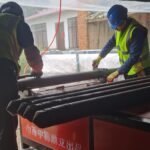
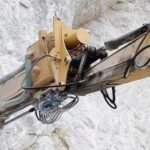
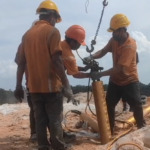
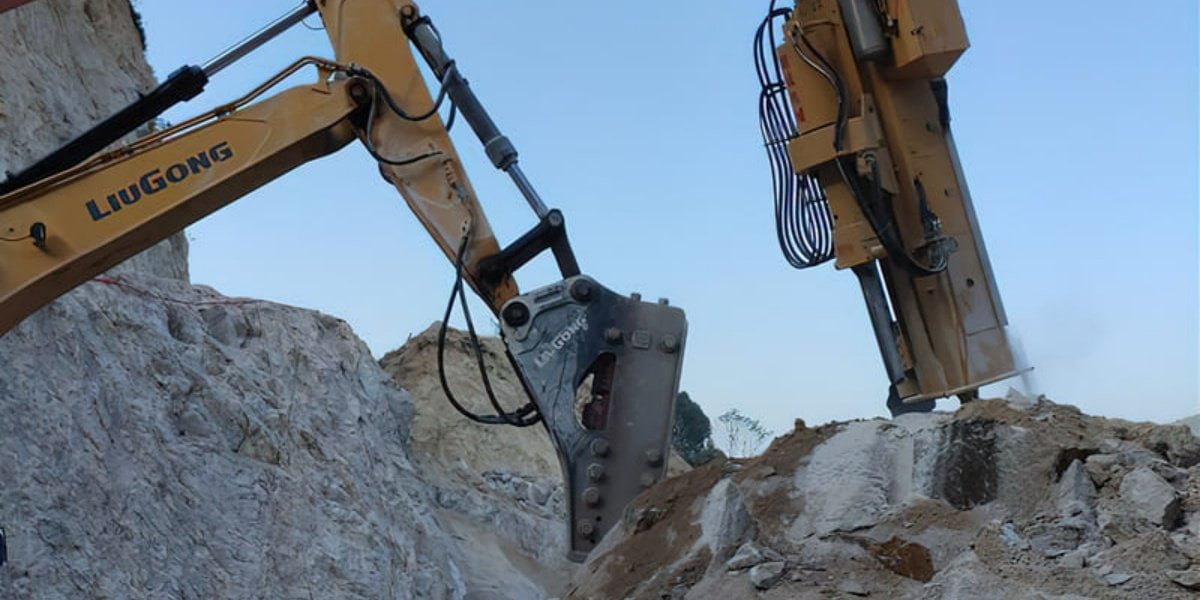
An integrated drilling and splitting machine is mainly used for non-explosive rock breaking in quarries, mines, roadworks, tunnels, foundation pits, municipal projects, and restricted-blasting areas. It drills holes and performs hydraulic splitting in one coordinated workflow, making controlled cracking more practical1 where vibration, noise, safety rules, or blasting permits limit explosive use.
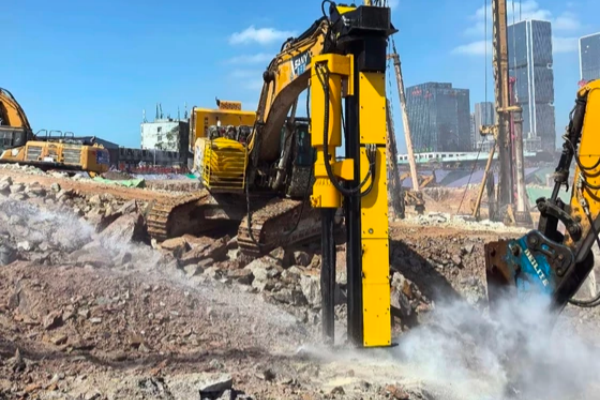
In my experience as a manufacturer and exporter, the real question is not only “what is it used for?” The more useful question is: when is this rock-breaking method suitable? That depends on the rock, the free face, hole design, operator skill2, and the output target.
Where Is an Integrated Drilling and Splitting Machine Used in Mining and Quarrying?
Mining and quarry buyers often need a way to break hard rock without uncontrolled damage. If the wrong method is selected, block quality drops, secondary breaking increases, and machine complaints follow. An integrated drilling and splitting machine is useful when the site needs planned drilling and controlled cracking instead of random force.
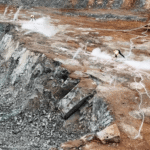
An integrated drilling and splitting machine is used in mining and quarrying for block extraction, secondary breaking, oversize rock reduction, bench trimming, and controlled separation of stone. It is most suitable when there is a usable free face, suitable hole depth, planned spacing, and operators who understand the splitting sequence.
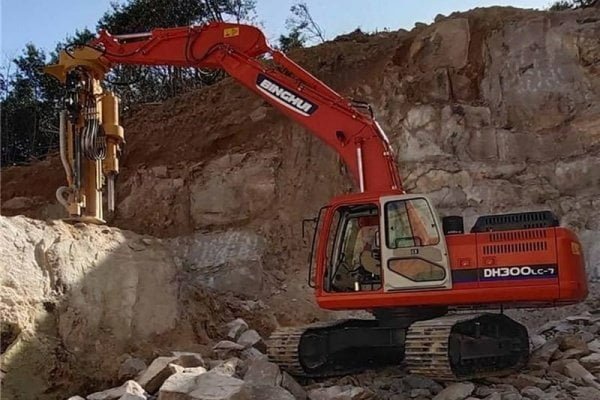
Common quarry and mining use cases
In quarry and mining projects, buyers usually consider this machine for two broad scenarios:
-
Primary controlled separation
- Dimensional stone quarrying
- Bench edge separation
- Block extraction
- Controlled cracking near valuable material
-
Secondary rock breaking
- Oversize boulder splitting
- Reducing rock after blasting
- Clearing large stones for crushers
- Breaking rock where hydraulic breakers are too slow or noisy
The machine is not only about power. It is about turning rock into predictable cracks. That is why hole position, hole angle, and splitting order matter so much.
Why integration matters in quarry work
With separate equipment, the operator may drill first, move the drill away, bring in a handheld splitter, adjust again, and then start splitting. On a clean site, that can work. On a narrow bench or uneven quarry floor, it can waste time and create alignment errors.
The value of integration is that drilling and splitting are coordinated in one workflow. This can help with:
- More consistent hole positioning
- Less equipment switching
- Lower labor coordination pressure
- Better suitability for repeated hole patterns
- More practical controlled cracking in limited space
I often hear from customers that the machine helps them reduce unnecessary machine movement. However, I also remind buyers that better workflow does not automatically mean better breaking. The hole design must still match the rock.
Key selection variables for quarry and mining buyers
| Site factor | Why it matters | Buyer evaluation point |
|---|---|---|
| Rock hardness | Harder rock needs better hole planning and sufficient splitting force | Do not judge only by motor power |
| Natural fractures | Existing cracks can help or disturb splitting | Inspect rock structure before choosing layout |
| Free face | Splitting needs space for rock to move | Check bench edge, exposed face, or pre-cut surface |
| Hole spacing | Wrong spacing can reduce cracking effect | Ask supplier for layout guidance, not only parameters |
| Hole depth | Deep or shallow holes change the split result | Match depth to block size and desired break line |
| Operator skill | Poor sequence can waste holes and time | Training should be included in procurement planning |
A common mistake I see
One common mistake is buying based only on machine parameters. A procurement manager may compare engine power, drilling diameter, and splitting force. These numbers matter, but they do not answer the whole question.
A strong machine with a poor hole layout can perform worse than a moderate machine with a correct splitting plan.
For quarry and mining applications, I suggest buyers ask suppliers practical questions:
- What rock types has the machine been used on?
- What hole diameter and spacing are usually recommended?
- How much free face is needed?
- What operator training is required?
- What wear parts should be stocked?
- What after-sales support is available in the target country?
For Meiger Machinery, we treat this as a procurement risk issue. We can describe common field-use patterns and after-sales feedback, but every buyer should verify the final method against the actual site conditions.
When Is an Integrated Drilling and Splitting Machine Suitable for Restricted-Blasting Projects?
Urban and infrastructure projects often face vibration, dust, noise, and permit limits. If blasting is restricted, contractors still need to excavate rock safely and on schedule. An integrated drilling and splitting machine is suitable when controlled non-explosive breaking can meet the project’s space, output, and cracking requirements.
An integrated drilling and splitting machine is suitable for restricted-blasting projects when rock must be broken near buildings, roads, tunnels, pipelines, foundations, or municipal assets. It helps reduce reliance on explosives, but it must be matched with rock hardness, working space, hole layout, and daily output expectations.
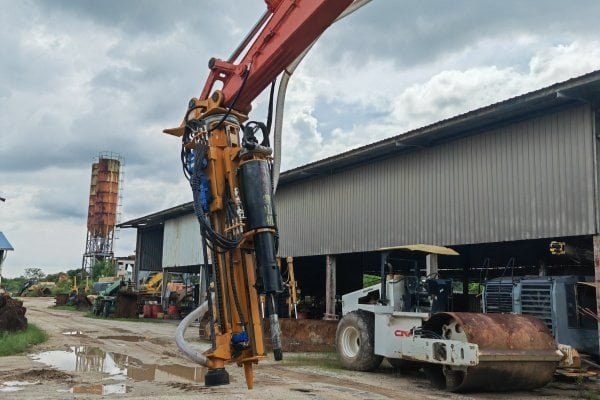
Typical restricted-blasting applications
This machine is often considered in:
- Road widening and mountain road excavation
- Tunnel entrance or tunnel side excavation
- Foundation pit rock removal
- Municipal pipeline trenching
- Bridge and culvert construction
- Rock removal near buildings
- Projects where explosive approval is difficult
In these situations, the purpose is not always maximum production. The purpose may be controlled excavation with lower disturbance. That difference is important for procurement teams.
What “controlled” really means
Controlled rock breaking means the contractor plans where cracks should start, where they should travel, and how the broken rock will be removed. The machine does not magically split rock in any direction. It follows the weakness created by the drilled holes and the pressure applied by the splitting system.
The main planning points are:
-
Where is the free face?
Rock needs somewhere to move. If the rock is locked on all sides, splitting becomes harder. -
What is the hole pattern?
Hole spacing and depth influence the crack path. -
How much working space is available?
Tunnels, trenches, and foundation pits may limit turning radius, drilling angle, and material removal. -
What is the expected output?
A machine suitable for controlled excavation may not match the production speed of blasting in open areas. -
How skilled are the operators?
Operators must understand drilling order, splitting order, and safe working distance.
Restricted-blasting does not mean “no engineering judgment”
I avoid saying that an integrated drilling and splitting machine can replace blasting in all hard-rock projects. That claim is too broad. In some open-pit hard-rock mining projects, blasting may still be more economical. In some narrow or sensitive projects, non-explosive splitting may be more practical.
A useful comparison is shown below:
| Method | Best fit | Main limitation |
|---|---|---|
| Explosive blasting | Large-volume open excavation | Permits, vibration, fly rock, safety controls |
| Hydraulic breaker | Smaller breaking and trimming | Noise, vibration, slow work in massive hard rock |
| Handheld splitter | Small-scale controlled splitting | More manual handling, separate drilling required |
| Integrated drilling and splitting machine | Planned non-explosive breaking with repeated holes | Needs correct hole design and operator training |
How I advise buyers to frame the decision
When a contractor asks me whether this machine can solve a difficult restricted-blasting job, I usually ask for project details before discussing machine price. This is not because parameters are unimportant. It is because the same machine can behave differently in different rock.
Good procurement questions include:
- Is the project above ground or underground?
- Is the rock layered, fractured, or massive?
- What is the required hole depth?
- Is there an open face for the split?
- What is the minimum working width?
- Is the target rock removal daily, weekly, or monthly?
- Are local regulations limiting explosives, noise, or vibration?
For buyers in Southeast Asia, the Middle East, and Africa, I also suggest checking spare parts supply, operator training support, and documentation. Certifications such as ISO 9001 and CE should be treated as documents to verify during supplier qualification, not as a substitute for site evaluation.
How Does the Machine Coordinate Drilling, Splitting, and Rock Crack Control?
Some buyers think the machine is just a drill with a splitter attached. That misunderstanding creates wrong expectations. The core value is workflow coordination. An integrated drilling and splitting machine is used when drilling accuracy, splitting sequence, and controlled cracking need to work together on the same site.
The machine coordinates drilling and splitting by creating planned holes, applying hydraulic splitting force through those holes, and guiding cracks along a designed path. Its value comes from reducing equipment switching, improving positioning consistency, and making repeated controlled splitting easier than using separate machines in some work conditions.
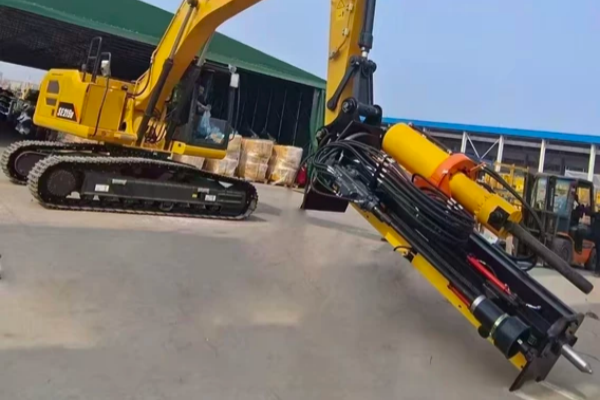
The basic working logic
The workflow usually follows this pattern:
- Assess the rock and free face
- Plan hole position, angle, spacing, and depth
- Drill holes according to the layout
- Insert the splitting tool or use the integrated splitting unit
- Apply hydraulic pressure
- Control the crack sequence
- Remove broken rock
- Adjust the next hole layout based on field response
This is why I describe the machine as part of a method, not only as a piece of hardware.
Why hole design is so important
The crack will usually follow the path of least resistance. If the hole spacing is too wide, the crack may not connect. If the holes are too shallow, the split may be incomplete. If the holes are poorly aligned, the rock may break in the wrong direction.
Key hole design factors include:
- Hole diameter
- Hole depth
- Hole spacing
- Hole angle
- Distance from free face
- Rock bedding direction
- Natural fracture direction
- Desired block size
A buyer should not expect one universal layout. Even within the same quarry, the rock may change from one bench to another.
Integration reduces switching, but it does not remove planning
The integrated design can reduce the need to move between a drilling rig and a separate splitting device. This can be helpful in:
- Narrow working areas
- Repeated hole patterns
- Sites with limited labor
- Projects where equipment movement causes delays
- Jobs needing controlled cracking near sensitive structures
However, integration does not remove the need for trained operators. In after-sales communication, I have seen issues caused by:
- Operators drilling without a clear crack plan
- Teams copying a hole pattern from another site
- Buyers expecting the same output in fractured and massive rock
- Poor maintenance of hydraulic components
- Lack of spare chisels, seals, or wear parts on site
These are not only technical issues. They are procurement planning issues.
What purchasing managers should evaluate
For B2B buyers, I suggest evaluating the machine in five layers:
| Evaluation layer | What to check |
|---|---|
| Application fit | Quarry, tunnel, road, foundation, municipal, or secondary breaking |
| Rock condition | Hardness, fractures, bedding, abrasiveness, free face |
| Workflow fit | Space, movement, hole pattern repetition, removal method |
| Supplier support | Training, spare parts, manuals, video support, export experience |
| Compliance documents | ISO, CE, test reports, customs documents, and local requirements |
The machine should be selected as part of a complete rock-breaking method. It should not be bought only because the catalog looks strong.
What Procurement Mistakes Should Buyers Avoid Before Choosing This Machine?
Procurement teams often want a quick answer: “Will this machine break my rock?” That question is understandable, but it is too simple. If site details are ignored, even a suitable integrated drilling and splitting machine may underperform and create unnecessary warranty pressure.
Buyers should avoid choosing an integrated drilling and splitting machine based only on price, power, or drilling diameter. They should evaluate rock condition, free face, hole layout, operator training, spare parts, supplier documentation, and after-sales support before making a purchase decision.
Mistake 1: Focusing only on machine parameters
Parameters help buyers compare models. Still, they do not prove site performance by themselves. A high-powered machine may not solve a job if the rock has no free face or if holes are placed incorrectly.
Important parameters include:
- Drilling diameter range
- Drilling depth capacity
- Hydraulic pressure
- Splitting force design
- Power system
- Machine weight
- Mobility
- Maintenance access
But these should be reviewed together with the site method.
Mistake 2: Ignoring operator training
Operator skill has a direct effect on controlled cracking. A trained operator can adjust the hole layout after seeing how the rock reacts. An untrained operator may keep repeating the same pattern even when the result is poor.
For contractors and rental companies, training is especially important because different teams may use the same machine on different sites.
A practical training plan should include:
- Basic machine operation
- Drilling alignment
- Hole spacing principles
- Splitting sequence
- Daily maintenance
- Safety checks
- Troubleshooting common faults
Mistake 3: Assuming the same output in every rock
Rock is not uniform. Massive granite, fractured limestone, weathered basalt, and layered sandstone can react differently. Even if the machine is well built, output will vary.
Buyers should ask suppliers for method guidance, but they should also arrange qualified local engineering evaluation for application-specific decisions. A manufacturer can share machine knowledge and common field feedback. A project engineer should confirm the final excavation plan.
Mistake 4: Underestimating spare parts and after-sales needs
For export markets, spare parts planning can decide whether a machine stays productive. A low purchase price may become expensive if basic parts are not available.
Buyers should check:
- Seal kits
- Hydraulic hoses
- Drill bits
- Wear parts
- Filters
- Control components
- Training materials
- Remote support response time
At Meiger Machinery, we often remind customers to discuss spare parts before shipment, not after the machine reaches a remote mining site. This simple step can reduce downtime and after-sales pressure.
Frequently Asked Questions
Can an integrated drilling and splitting machine replace blasting completely?
No. An integrated drilling and splitting machine can reduce reliance on explosives in many vibration-, noise-, or permit-sensitive projects. However, it should not be treated as a universal replacement for blasting in every hard-rock condition. Site evaluation is still necessary.
What rock conditions are best for this machine?
It is usually more suitable when the rock has a workable free face, reasonable hole depth, and a clear cracking direction. Natural fractures can help or disturb the split. Massive hard rock may require tighter hole spacing, stronger planning, and experienced operators.
Is this machine better than using a separate drill and handheld splitter?
It can be better when the site benefits from coordinated drilling and splitting, less equipment switching, and repeated hole patterns. Separate drilling and handheld splitting may still be practical for smaller jobs, simple layouts, or sites with enough labor and space.
What should buyers ask before purchasing?
Buyers should ask about application fit, rock conditions, hole layout guidance, operator training, spare parts, delivery schedule, warranty scope, and compliance documents. Certifications such as ISO 9001 and CE should be verified during supplier qualification.
Who commonly buys this type of machine?
Typical buyers include purchasing managers, engineering contractors, mine owners, quarry operators, and equipment rental companies. They usually need controlled non-explosive rock breaking for mining, quarrying, road construction, tunnels, foundation pits, or municipal excavation.
Conclusion
An integrated drilling and splitting machine is used for controlled, non-explosive rock breaking where drilling layout, splitting sequence, site limits, and rock condition must be considered together. It is valuable in quarrying, mining, roadworks, tunnels, foundation pits, and restricted-blasting areas, but it is not a universal replacement for explosives. If you are evaluating this method for a project, share your rock type, working space, output target, and site photos with Meiger Machinery so we can help you review the application fit before procurement.
"Rock Blasting and Control Overbreak", https://www.fhwa.dot.gov/engineering/geotech/pubs/012844.pdf. Research indicates that non-explosive rock breaking methods can significantly reduce vibration and noise levels compared to traditional blasting techniques, although specific results may vary based on site conditions. Evidence role: general_support; source type: research. Supports: The source should support the effectiveness of non-explosive methods in reducing vibration and noise in controlled rock breaking.. Scope note: The support is contextual and may not apply universally to all types of rock or project conditions. ↩
"Impact of Hydraulic Resistance on Spatiotemporal ... - PMC", https://pmc.ncbi.nlm.nih.gov/articles/PMC11676415/. Research consensus indicates that operator skill is a critical factor in achieving effective controlled cracking in rock breaking, although specific impacts can vary by method and rock type. Evidence role: expert_consensus; source type: research. Supports: The source should support the idea that operator skill significantly influences the effectiveness of controlled rock breaking.. Scope note: The consensus may not reflect all operational contexts. ↩