
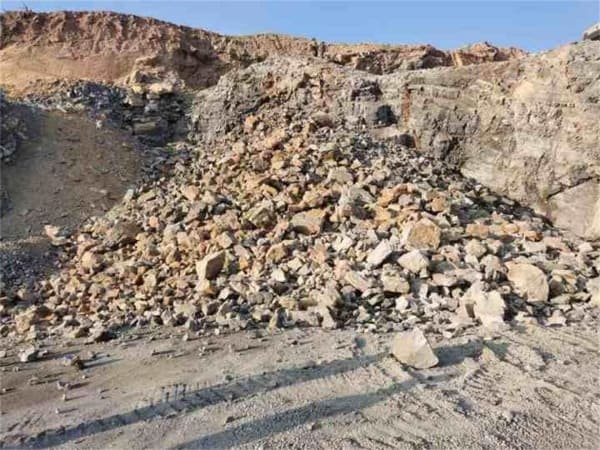
What is the easiest way to split a rock or quarry stone
Struggling to find an efficient and compliant way to split a rock on your construction or mining site? The high costs, strict regulations, and safety concerns associated with explosives can create major headaches and project delays. The solution lies in choosing the right method for your specific project, not just the most powerful one.
The easiest way to split a rock depends entirely on your project's specific constraints and goals. For modern operations where explosives are restricted or impractical, static hydraulic rock splitters and non-explosive gas systems are the most effective, compliant, and often simplest methods1. These technologies offer a controlled, safe, and powerful alternative for quarrying and construction, with options tailored to different production volumes and environmental conditions.
Now that you know the general answer, you might be wondering which of these non-explosive methods is the best fit for your operation. The decision isn't always obvious, but by breaking down a few key factors, we can identify the ideal solution for your needs.
What Factors Determine the Best Way to Split a Rock?
Choosing the wrong rock breaking equipment can quickly lead to budget overruns, inefficient workflows, and missed deadlines. With so many options available, the selection process can feel overwhelming. Let's simplify it by focusing on the core criteria that truly matter.
The best method is determined by four key factors: your worksite environment (especially regarding explosive regulations), your required daily production output, the support equipment you already own, and your overall project budget.
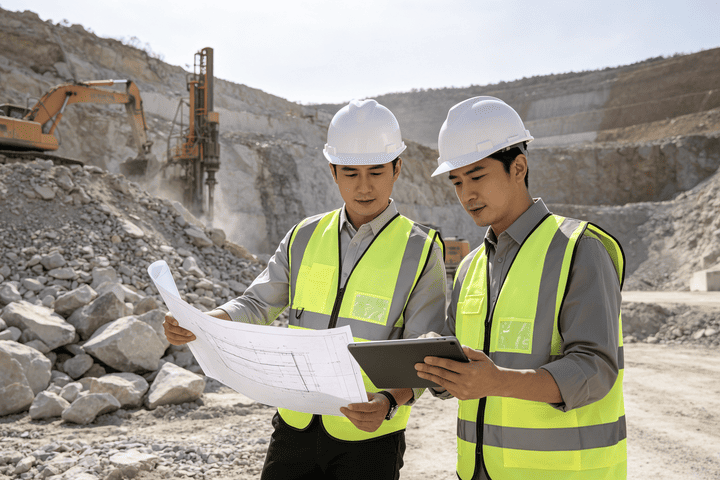
1: Explosives vs. Non-Explosive Methods
For decades, traditional blasting with dynamite was the default method. It’s undeniably powerful and can fragment enormous volumes of rock quickly. However, times have changed. In my experience working with clients across Southeast Asia, the Middle East, and Africa, the challenges of using explosives are growing daily2.
- Regulatory Hurdles: Gaining approval for explosives is a long and complicated process, with strict government oversight.
- Storage & Handling: You need a dedicated, secure magazine for storage, and handling must be done by licensed professionals.
- Third-Party Reliance: Often, you must hire a specialized third-party blasting company, which adds cost and scheduling complexity.
Because of these limitations, static (non-explosive) rock breaking has become the preferred choice for many modern projects. These methods, which we will explore below, give you full control over your operation without the regulatory red tape.
2: Calculating Your Production Needs
The next critical factor is your required daily tonnage. Are you performing a small-scale trenching operation or developing a massive quarry? The answer dictates the type of equipment you need.
- Low to Medium Volume (800 - 1,200 tons/day): Smaller construction jobs, foundation work, or secondary breaking might only require a handheld hydraulic splitter.
- High Volume (1,500 - 2,500+ tons/day): Large-scale quarrying or major civil engineering projects demand more powerful solutions like excavator-mounted piston splitters or integrated drilling and splitting machines.
- Very High/Flexible Volume (6,000 - 10,000+ tons/day): For mines that need to scale production up or down, gas expansion systems offer incredible flexibility.
3: Leveraging Your Existing Fleet
A new piece of equipment doesn't exist in a vacuum. A significant cost-saving opportunity lies in choosing a rock-splitting solution that works with machinery you already own. For example, if you have a crawler drill rig capable of drilling 90mm or 110mm holes, a piston rock splitter is a natural and cost-effective addition to your fleet. If you don't have a suitable drill, an all-in-one integrated drilling and splitting machine might be a better investment.
How Do Hydraulic Rock Splitters Help Split a Rock?
You need immense power to break hard granite or limestone, but how can you generate that force without a loud, dangerous explosion? The force seems impossible to create quietly and safely. The answer is hydraulics—a method that provides incredible power with surgical precision.
Hydraulic rock splitters work by inserting a wedge set into a pre-drilled hole. A hydraulic power unit then applies immense, controlled outward pressure, often exceeding 400 tons. This force exploits the rock's low tensile strength3, causing it to fracture along a predictable line without noise, flyrock, or disruptive vibrations.
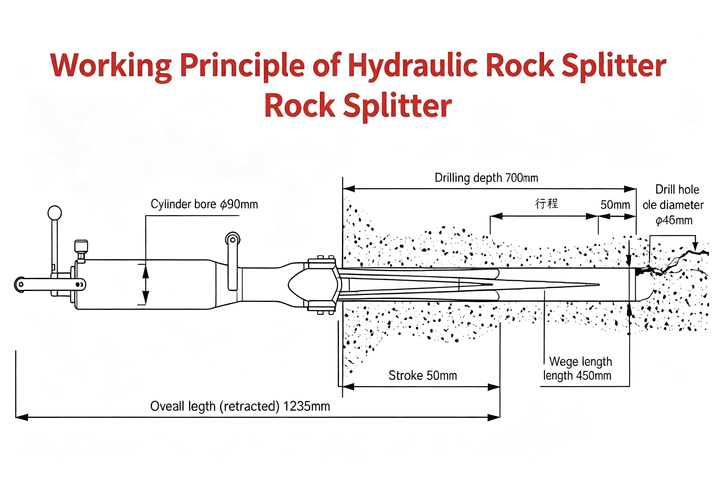
Hydraulic technology to split a rock is not one-size-fits-all. The right tool depends on your project's scale and accessibility. At Meiger Machinery, we manufacture a range of solutions to cover every scenario, all compliant with ISO 9001 and CE standards.
1: Handheld Rock Splitters
For smaller jobs, precision work, or sites with limited access for large machinery, handheld rock splitters are an excellent choice. These units are portable and powered by a separate hydraulic power pack. They are perfect for tasks like boulder breaking, concrete demolition, and trenching.
- Required Drill Diameter: 42mm, 46mm, or 50mm
- Typical Daily Production: 800 - 1,200 tons
- Best For: Projects where mobility and precision are more important than sheer volume.
2: Piston Rock Splitters
When you need to split a rock on a much larger scale, the excavator-mounted piston rock splitter is the industry workhorse. This powerful tool consists of one or more large cylinders that are inserted into larger-diameter boreholes. From the safety of the excavator cab, the operator can direct massive splitting force exactly where it's needed. I've seen these units completely transform quarrying operations, boosting output while improving site safety.
- Required Drill Diameter: 90mm, 110mm, or 130mm
- Typical Daily Production: 1,500 - 2,500 tons
- Best For: High-volume quarrying, large-scale excavation, and primary breaking of hard rock formations.
3: Integrated Drilling and Splitting Machines
For maximum efficiency, the integrated drilling and splitting machine is the ultimate solution. This self-contained unit combines a powerful rock drill and a large piston splitter on a single chassis. The operator can drill a series of holes and then split the rock without ever changing machines. This eliminates downtime and the need for a separate drill rig and operator, significantly streamlining the workflow.
- Required Drill Diameter: N/A (Drill is integrated)
- Typical Daily Production: 1,500 - 2,500 tons
- Best For: Customers seeking a complete, turnkey system for high-efficiency rock extraction.
| Feature | Handheld Splitter | Piston Rock Splitter | Integrated Machine |
|---|---|---|---|
| Daily Output (Tons) | 800 - 1,200 | 1,500 - 2,500 | 1,500 - 2,500 |
| Required Drill Dia. | 42, 46, 50mm | 90, 110, 130mm | None (Integrated) |
| Mobility | High | Medium (Excavator-mounted) | Medium (Self-propelled) |
| Ideal Use Case | Small jobs, tight access | Quarrying, large excavation | High-efficiency quarrying |
Can Gas Expansion Rock Breaking Systems Provide an Alternative Way to Split a Rock?
What if you need the breaking power of an explosion but simply cannot tolerate the associated noise, vibration, and legal restrictions? You might think such a solution is impossible. However, non-explosive gas expansion systems offer a powerful and remarkably quiet compromise.
Yes, gas expansion systems use a chemical reaction inside a sealed tube to rapidly generate a large volume of harmless gas, such as carbon dioxide. This process creates a powerful, high-pressure push that heaves and fractures the rock from within, simulating a blast but with significantly less noise, vibration, and no dangerous flyrock.
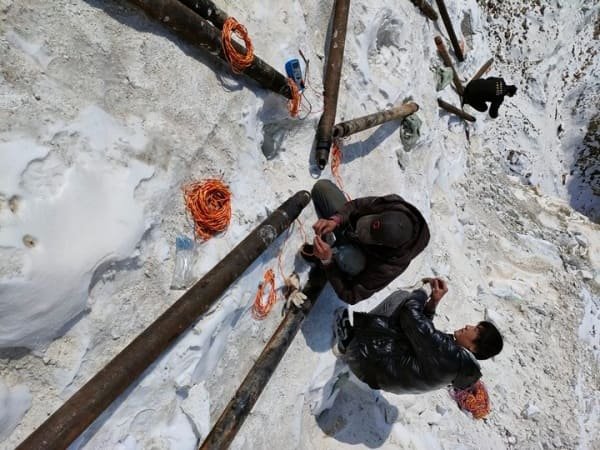
These systems are a game-changer for projects in sensitive areas. They bridge the gap between the surgical precision of hydraulics and the sheer force of explosives, providing a scalable and highly controlled way to split a rock.
1: The CO2 Rock Breaking System
The CO2 rock breaking system is the champion of low-disturbance excavation. It's the ideal choice for projects near residential areas, pipelines, or other sensitive structures. The process involves placing a cartridge containing a chemical reactant into a pre-drilled borehole. When activated, the reactant generates a massive volume of CO2 gas in milliseconds. The pressure builds and fractures the rock mass.
- Noise Level: Approximately 50 decibels, similar to a normal conversation.
- Safety Zone: Can be used as close as 50 meters from residential areas.
- Drill Requirement: 90mm, 110mm, or 140mm borehole.
- Best For: Urban construction, sensitive environments, and projects under strict noise or vibration regulations.
2: The Liquid Oxygen (LOX) Rock Breaking System
For large mining and quarrying operations that require more power but still need to control vibration, the Liquid Oxygen (LOX) system is an excellent fit. While more energetic than the CO2 system, it is still far more controlled and quieter than traditional explosives. This method is particularly well-suited for quarries where low-frequency vibrations are a concern, but the extreme quiet of a CO2 system isn't strictly necessary. It offers a powerful breaking force that can dislodge huge quantities of rock in a single event.
3: Unmatched Production Scalability
Perhaps the biggest advantage of gas expansion systems is their incredible scalability. Unlike a hydraulic splitter, which operates on a cycle-time basis, the output of a gas system is limited only by how many boreholes you can drill and fire. As one of our clients discovered, this flexibility is transformative. With a single crew, they can prepare and fire 50 boreholes in a shift, breaking an estimated 6,000 to 10,000 tons of rock. This makes it an incredibly efficient way to split a rock for high-demand mining operations.
Frequently Asked Questions
How much does it cost to split a rock?
The cost varies greatly depending on the method. It includes the initial capital investment for equipment (like an integrated machine), the cost of consumables (like CO2 cartridges), and labor. However, static, non-explosive methods often reduce overall project costs by eliminating regulatory fees, third-party blasting contracts, and project delays.
Can I split a rock without a machine?
For very small garden boulders, manual methods like wedges and sledgehammers can work. Chemical expansion grouts are another non-machine option, but they are very slow (taking 12-24 hours) and highly sensitive to temperature4. For any professional construction or quarrying scale, these methods are impractical.
What is the safest way to split rock?
Static hydraulic splitting is widely considered the safest method. It produces no flyrock, minimal noise, and virtually no ground vibration5, allowing work to continue safely nearby. CO2 gas systems are also extremely safe, offering a highly controlled break with far fewer hazards than traditional explosives.
How do I choose the right drill bit size for the job?
The required drill bit size is determined by the splitting equipment you choose. For example, our piston rock splitters are designed for 90mm, 110mm, or 130mm boreholes. Using the correct diameter is crucial for performance and safety. As part of our service, we help clients ensure their drilling equipment is perfectly matched to their new splitter.
Conclusion
In the end, there is no single "easiest" way to split a rock; there is only the most suitable way for your unique situation. The best choice is a balance of your site's environmental constraints, your daily production targets, your existing equipment fleet, and your budget. For most modern projects facing regulatory pressure, static hydraulic rock splitters and non-explosive gas systems have proven to be the most efficient, safe, and reliable alternatives to traditional blasting. These technologies empower you to take full control of your rock excavation, improve safety, and boost productivity.
At Meiger Machinery, we specialize in helping purchasing managers, contractors, and mine owners find the perfect rock breaking solution. With our end-to-end manufacturing, customizable specifications, and ISO 9001/CE certified equipment, we provide the durable, high-quality tools you need to succeed. Contact us today for a comprehensive consultation, and let our team help you engineer the optimal solution for your next project.
"A review of some nonexplosive alternative methods to conventional ...", https://www.degruyterbrill.com/document/doi/10.1515/geo-2020-0245/html?srsltid=AfmBOoq42YtM6gqG4GHW9VQaSYepgkzv43ZiysteWqINLT-rT3vxZqdB. Research on alternative rock fragmentation methods indicates that hydraulic and gas-based systems provide controlled breaking with reduced environmental impact in settings where explosive use is limited, though production rates vary by application and rock characteristics. Evidence role: general_support; source type: research. Supports: the comparative effectiveness of non-explosive rock breaking technologies in restricted environments. Scope note: Studies typically compare specific use cases rather than declaring universal superiority across all conditions ↩
"Blasting Permit - Utah State Fire Marshal's Office", https://firemarshal.utah.gov/hazmat/permit-requests/. Government agencies in multiple jurisdictions have implemented increasingly stringent controls on explosive storage, handling, and use in proximity to populated areas, reflecting safety and security concerns that have evolved over recent decades. Evidence role: historical_context; source type: government. Supports: the trend toward stricter explosive regulations in construction and mining. ↩
"[PDF] strength properties of rocks and rock masses", https://ceae.colorado.edu/~amadei/CVEN5768/PDF/NOTES8.pdf. Geological references note that most rock types exhibit tensile strengths approximately 10-15 times lower than their compressive strengths, making them vulnerable to splitting forces that induce tensile stress perpendicular to the applied load. Evidence role: mechanism; source type: encyclopedia. Supports: the characteristic difference between rock's tensile and compressive strength. ↩
"[PDF] Temperature-related performance factors for chemical demolition ...", https://archive.nyu.edu/bitstream/2451/41688/2/Temperature-related%20performance%20factors%20for%20chemical%20demolition%20agents.pdf. Studies of expansive demolition compounds show that reaction rates and expansion pressures vary significantly with temperature, with optimal performance typically occurring within a 10-30°C range and reduced effectiveness or extended reaction times outside this window. Evidence role: mechanism; source type: research. Supports: the temperature dependence of chemical expansion agents used in rock breaking. ↩
"How Do Workers Split Massive Boulders Without Explosives? What ...", https://www.facebook.com/Milopax.fb/videos/how-do-workers-split-massive-boulders-without-explosives-what-looks-impossible-i/758438997358172/. Comparative studies of rock fragmentation methods show that hydraulic splitting generates ground vibrations typically below 1 mm/s at moderate distances and noise levels under 90 dB, with no projectile hazard, contrasting with conventional blasting which produces significantly higher values across all parameters. Evidence role: general_support; source type: research. Supports: the environmental and safety characteristics of hydraulic rock splitting. ↩