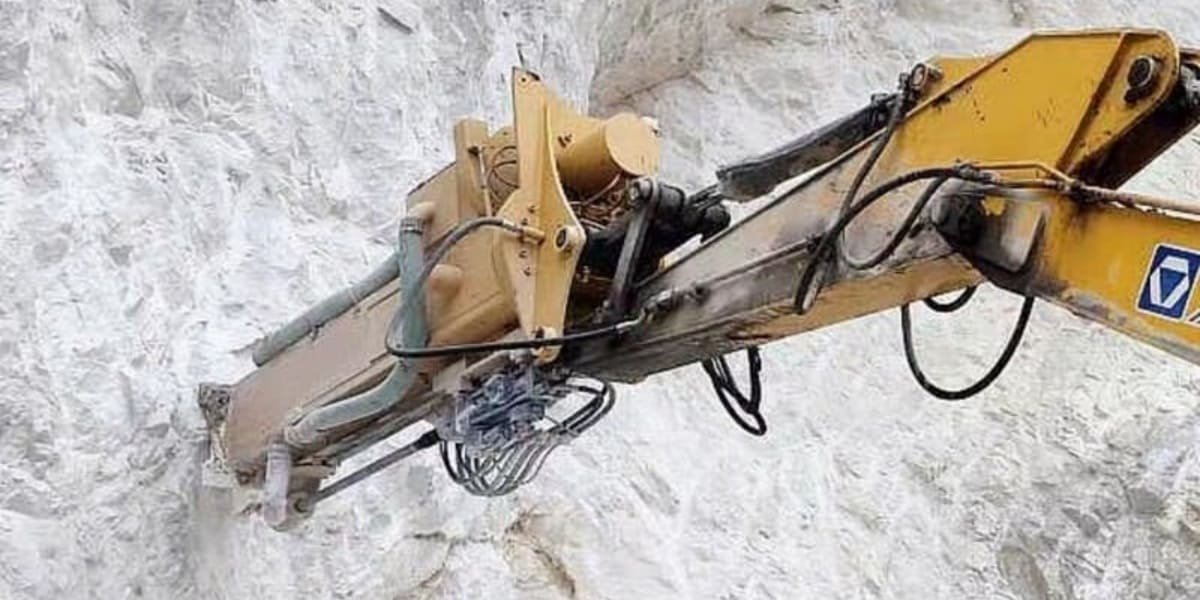
What Is a Hydraulic Integrated Rock Drill and Splitter Machine for Excavator?
A hydraulic integrated rock drill and splitter machine can look like a simple excavator attachment at first, but that view often creates procurement mistakes. Buyers may compare only price, then discover problems with rock hardness, hydraulic matching, or site workflow. I see it as a complete drilling-and-splitting method for controlled rock removal.
A hydraulic integrated rock drill and splitter machine for excavator is an excavator-mounted system that combines rock drilling and hydraulic splitting in one working cycle. It drills a hole, positions the splitter, applies hydraulic force to crack the rock, and then works with the excavator for clearing. It may reduce blasting dependence in suitable controlled-breaking conditions.1
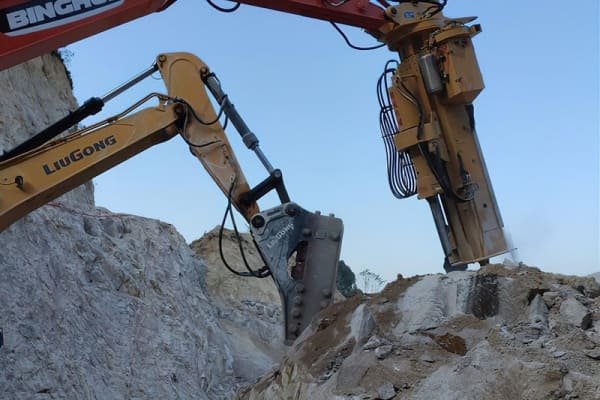
In my export and pre-sales work, I often find that the better question is not only “What is this machine?” The real question is: Is this the right method for my rock, excavator, site restriction, and production target?
How Does a Hydraulic Integrated Rock Drill and Splitter Machine Work?
A hydraulic integrated rock drill and splitter machine solves one common problem in hard-rock excavation: drilling and breaking are often separated. That can increase equipment investment, site coordination, and waiting time. If the site also limits blasting, the pressure becomes higher.
A hydraulic integrated drill-splitter uses the excavator’s hydraulic power source. The machine drills the hole, places the splitting wedge or splitting unit, and uses hydraulic pressure to expand inside the hole2. The controlled force creates cracks, so the excavator can then remove loosened rock.
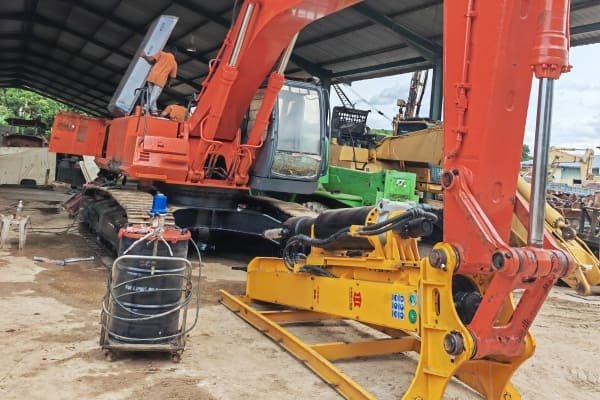
Basic working process
The process is usually simple to understand:
- Mount the machine on a suitable excavator.
- Use the drilling function to drill holes into the rock.
- Insert or position the splitting wedge system.
- Apply hydraulic splitting force to crack the rock.
- Use the excavator bucket, breaker, or loader to clear the loosened material.
This workflow is useful because it combines two important steps. It does not require a separate drilling rig in every case. It also uses the excavator arm, so the working range is wider and movement is flexible.
Why integration matters
For procurement managers, the word “integrated” is important. It means the machine is not only a splitter. It is a task-specific drilling-and-splitting system. The value depends on the full workflow, not only the steel structure or hydraulic cylinder size.
In our manufacturing communication, I usually remind buyers to consider:
- Hole diameter
- Hole depth
- Rock type and joint condition
- Excavator tonnage
- Hydraulic flow and pressure
- Working space
- Clearing method after splitting
- Blasting restrictions
- Spare parts and maintenance plan
If any of these factors are ignored, the machine may not perform as expected. That is why I do not describe it as a universal replacement for explosives. It can be a good reduced-blasting or non-explosive solution in the right conditions, but the site must be evaluated first.
When Is a Hydraulic Integrated Rock Drill and Splitter Machine Suitable?
A hydraulic integrated rock drill and splitter machine is most useful when contractors need controlled cracking instead of high-impact breaking or unrestricted blasting. However, not every rock excavation job is suitable. Rock structure, bench height, access, and removal method all matter.3
This machine is suitable for restricted blasting areas, secondary breaking, quarry trimming, urban or near-structure excavation, and controlled rock removal4. It may reduce dependence on explosives where drilling and hydraulic splitting can create useful cracks, but suitability must be checked against rock and site conditions.
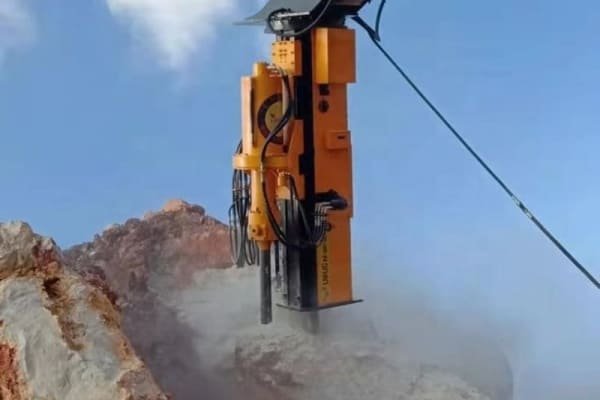
Common suitable applications
I usually see interest from buyers working in:
- Mining secondary breaking
- Quarry block removal or trimming
- Road and tunnel-related rock clearance
- Urban foundation excavation
- Rock removal near buildings or sensitive structures
- Projects with blasting approval limits
- Sites where vibration, flyrock, and noise must be controlled
The main advantage is control. Hydraulic splitting creates cracks along the drilled hole direction.5 It is usually more predictable than uncontrolled impact breaking. It can also help reduce vibration compared with explosive blasting or heavy hammering6.
Conditions that affect performance
Buyers should not look only at the machine model. They should first describe the rock excavation task.
| Evaluation factor | Why it matters |
|---|---|
| Rock type | Granite, limestone, basalt, marble, and fractured rock behave differently7 |
| Rock hardness | Harder rock may require different hole spacing and more time |
| Natural cracks | Jointed rock may split more easily than massive rock8 |
| Bench height | It affects hole depth, working angle, and clearing |
| Working space | Narrow sites may limit excavator movement |
| Hole diameter | It must match the splitting system |
| Hole depth | It affects crack development and block size |
| Muck removal | Splitting is only one step; clearing still controls total output |
A practical buyer mindset
In my experience, some buyers ask, “How many tons per day?” before sharing rock details. I understand why. Production matters. But without site data, any number can mislead the procurement decision.
For example, a buyer targeting high daily output with a 152 model should still confirm:
- Whether the excavator is large enough
- Whether the hole depth is suitable
- Whether the rock can crack effectively
- Whether the site can remove split rock fast enough
- Whether operators can keep a steady drilling-splitting rhythm
So, I prefer to discuss target output rather than promise fixed output. A supplier can provide model capacity information, but a responsible decision should include site evaluation and professional engineering judgment.
How Do You Match a Hydraulic Integrated Rock Drill and Splitter Machine With an Excavator?
A hydraulic integrated rock drill and splitter machine is not always plug-and-play. A buyer must match it with the excavator’s tonnage, hydraulic system, mounting size, pipeline configuration, and operating rhythm. Wrong matching can cause low efficiency, overheating, unstable movement, or unnecessary wear.
To match the machine correctly, buyers should confirm excavator brand, model, tonnage, hydraulic flow, hydraulic pressure, auxiliary pipeline setup, arm working range, mounting dimensions, and carrier stability. The attachment must suit both the excavator and the rock-breaking task.
Our common model reference
At Meiger Machinery, we discuss two main models with buyers: 115 model and 152 model. These references help procurement teams make an initial selection before detailed technical confirmation.
| Model | Suggested excavator size | Hole diameter | Hole depth reference | Notes |
|---|---|---|---|---|
| 115 model | 25 tons and above | 115 mm | About 1.5–1.7 m | Suitable for medium excavator matching |
| 152 model | 45 tons and above | 152 mm | 1.5–1.7 m with 1 m wedge; 2–2.2 m with 1.5 m wedge | More flexible wedge options |
For the 152 model, wedge replacement can make operation more flexible. A 1 m wedge can match about 1.5–1.7 m hole depth. A 1.5 m wedge can match about 2–2.2 m hole depth. This matters because different bench heights and rock removal plans need different crack development.
Why excavator matching is critical
The excavator provides the oil source. If hydraulic flow or pressure is not suitable, the machine may not work smoothly. If the excavator is too small, it may not carry the attachment safely or maintain stable operation.
Before I recommend a configuration, I usually ask for:
- Excavator brand and model
- Operating weight
- Main pump flow
- Hydraulic pressure
- Auxiliary line availability
- Quick coupler or pin size
- Working site photos or videos
- Rock and bench information
Avoiding common procurement mistakes
I often see four mistakes in early inquiries:
-
Asking only for price
Price matters, but mismatch can create bigger costs later. -
Assuming any excavator can carry it
The machine depends on hydraulic power, carrier stability, and mounting compatibility. -
Assuming all rock can be split the same way
Massive hard rock, fractured rock, and layered rock require different planning. -
Expecting full blasting replacement
The machine may reduce blasting dependence in suitable conditions, but it should not be sold as a universal explosive replacement.
For purchasing managers and rental companies, the safest approach is to treat selection as a system-matching process.
What Should Buyers Check Before Purchasing a Hydraulic Integrated Rock Drill and Splitter Machine?
A hydraulic integrated rock drill and splitter machine is a capital equipment purchase, not a small spare part order. If buyers focus only on the lowest unit price, they may miss manufacturing quality, spare parts support, documentation, and after-sales response.
Before purchasing, buyers should check machine compatibility, supplier manufacturing capacity, spare parts availability, certification documents, customization ability, delivery schedule, and after-sales support. Total ownership cost usually matters more than the purchase price alone.
Supplier evaluation points
As a manufacturer and exporter, I believe buyers should verify the supplier, not only the product photo. Important checks include:
- Factory production ability
- Hydraulic component quality
- Welding and structural consistency
- Spare wedge and wear part supply
- Technical drawing and mounting support
- Packing and export experience
- Delivery schedule control
- Warranty terms
- Operator guidance
- Certification documents
Meiger Machinery is the export brand of Zhongde Dingli Group. We manufacture static-hydraulic rock-breaking equipment and gas expansion rock breaking systems. Our product range includes handheld rock splitters, piston rock splitters, integrated drilling-splitting machines, liquid CO₂ rock breaking systems, liquid-oxygen rock breaking systems, and down-the-hole drilling rigs.
We hold ISO 9001 and EU CE-related certification documents, but I always recommend that buyers verify certificates based on their own import, tender, and compliance requirements.
Procurement comparison table
| Buyer concern | What to ask the supplier |
|---|---|
| Excavator matching | Which excavator tonnage, flow, and pressure are required? |
| Rock suitability | What rock information is needed before selection? |
| Spare parts | Which parts wear fastest, and are they stocked? |
| Customization | Can wedge length, mounting bracket, or pipeline setup be adjusted? |
| Delivery | What is the production and shipping schedule? |
| Documentation | Can the supplier provide manuals, certificates, packing list, and HS code support? |
| After-sales | How are installation, training, and troubleshooting handled? |
Why rental companies should be extra careful
Equipment rental companies face a different risk. Their machines may work on many sites, with different excavators and rock conditions. A rental company should confirm whether one configuration can serve its main customer group, or whether multiple brackets, wedges, or spare parts are needed.
A lower purchase price can become expensive if the machine sits idle due to poor matching. For this reason, I suggest rental buyers prepare a typical customer profile before ordering.
Frequently Asked Questions
Can this machine completely replace blasting?
No. It may reduce dependence on blasting in suitable restricted or controlled-breaking conditions. However, blasting may still be more efficient for some large-scale excavation tasks. Buyers should evaluate rock type, volume, schedule, regulations, and site safety requirements before choosing the method.
What excavator size is required?
As a basic reference, our 115 model is usually matched with excavators of 25 tons and above. Our 152 model is usually matched with excavators of 45 tons and above. Final matching still depends on hydraulic flow, pressure, mounting dimensions, and working conditions.
What is the difference between the 115 model and 152 model?
The 115 model uses a 115 mm hole diameter and about 1.5–1.7 m hole depth. The 152 model uses a 152 mm hole diameter and can use different wedge groups. It can match deeper holes depending on wedge selection and site requirements.
Is it suitable for rental business?
Yes, it can be suitable for rental companies, but only when the customer base has compatible excavators and suitable rock-breaking tasks. Rental buyers should prepare spare parts, mounting options, operator guidance, and clear usage limits to reduce after-sales problems.
What information should I send for a quotation?
You should send excavator brand, model, tonnage, hydraulic flow and pressure, rock type, working space, bench height, required hole diameter and depth, clearing method, target output, schedule, and blasting restrictions. Photos and videos are also very helpful.
Conclusion
A hydraulic integrated rock drill and splitter machine is best understood as an excavator-mounted drilling-and-splitting system, not just another rock-breaking attachment. Its value depends on excavator compatibility, rock conditions, working space, productivity targets, and blasting restrictions. If you are evaluating this solution for mining, quarrying, construction, or rental use, I recommend starting with a practical inquiry checklist: excavator brand/model/tonnage, hydraulic flow and pressure, rock type, working space, bench height, required hole diameter/depth, clearing method, target output, schedule, and blasting restrictions. Contact Meiger Machinery with these details, and I can help you make a more reliable preliminary selection.
"Rock Blasting and Control Overbreak", https://www.fhwa.dot.gov/engineering/geotech/pubs/012844.pdf. Engineering literature identifies hydraulic splitting as a non-explosive rock-breaking method that can be used where blasting is restricted or undesirable; this supports reduced blasting dependence in applicable conditions but does not prove that it can replace blasting for all excavation scales or rock masses. Evidence role: general_support; source type: paper. Supports: The source should support that hydraulic splitting is a recognized non-explosive or reduced-blasting method for controlled rock breaking under suitable site and rock conditions.. Scope note: The support is conditional because suitability depends on rock mass characteristics, production requirements, and site constraints. ↩
"How Does This Machine Split Solid Rock So Easily? ...", https://www.facebook.com/Milopax.fb/videos/how-does-this-machine-split-solid-rock-so-easily-this-hydraulic-rock-splitter-us/1676383876797209/. Technical descriptions of hydraulic rock splitting explain that an expanding wedge or similar unit is inserted into a drilled hole and pressurized hydraulically, producing tensile stress that initiates and propagates cracks in the rock. Evidence role: mechanism; source type: education. Supports: The source should explain that hydraulic splitters are inserted into drilled holes and use hydraulic force to expand a wedge or plug-and-feather assembly, generating tensile stresses that crack the rock.. ↩
"Rock mass classification", https://www.rocscience.com/assets/resources/learning/hoek/Practical-Rock-Engineering-Chapter-3-Rock-Mass-Classification.pdf. Rock excavation guidance commonly treats geological structure, excavation geometry, site access, and material removal as interdependent factors in selecting and planning excavation methods. Evidence role: general_support; source type: education. Supports: The source should explain that rock excavation method selection depends on rock mass characteristics, bench geometry, access, and material handling or muck removal constraints.. Scope note: The source may address excavation method selection broadly rather than hydraulic integrated drill-splitting specifically. ↩
"Rock Blasting and Control Overbreak", https://www.fhwa.dot.gov/engineering/geotech/pubs/012844.pdf. Published engineering accounts describe hydraulic splitting and related non-explosive techniques as applicable to controlled rock removal, including restricted-blasting settings, secondary breakage, quarry work, and excavation near structures. Evidence role: case_reference; source type: paper. Supports: The source should identify hydraulic splitting or similar non-explosive methods as applicable to restricted blasting, secondary breaking, quarrying, or near-structure excavation.. Scope note: The support may refer to hydraulic splitting generally and may not verify each listed application for every integrated excavator-mounted configuration. ↩
"Rock Wedge Splitter - Quarrying & Tunneling Tool", https://www.darda.de/en/knowledge/rock-wedge-splitter. Rock-fracture studies of wedge or hydraulic splitting show that pressurization in a drilled hole generates tensile cracks whose initiation and propagation are influenced by the drilled-hole geometry and wedge orientation. Evidence role: mechanism; source type: paper. Supports: The source should explain how stress concentration from a hydraulic splitter in a drilled hole creates tensile cracks and how crack direction is influenced by hole placement and wedge orientation.. Scope note: Actual crack paths also depend on pre-existing joints, bedding, anisotropy, and in-situ stress, so the source should not be read as guaranteeing perfectly predictable crack direction. ↩
"APPENDIX G Rock Excavation Methods", https://www.villageofossiningny.gov/home/files/app-g. Comparative discussions of non-explosive rock breaking note that hydraulic splitting can substantially reduce ground vibration relative to blasting and high-impact breaking methods, although measured vibration levels depend on equipment, rock mass, and operating practice. Evidence role: general_support; source type: paper. Supports: The source should support that hydraulic splitting is associated with lower vibration than blasting and possibly lower impact vibration than percussive breaking in controlled applications.. Scope note: The source may support the general comparison but not provide site-specific vibration values for this machine. ↩
"Dynamic mechanical properties of different types of rocks ...", https://pmc.ncbi.nlm.nih.gov/articles/PMC10628249/. Rock mechanics references document substantial variation among rock types in strength, brittleness, and discontinuity characteristics, supporting the need to evaluate granite, limestone, basalt, marble, and fractured rock differently during drilling and splitting. Evidence role: general_support; source type: education. Supports: The source should show that rock types differ in mechanical properties such as compressive strength, tensile strength, brittleness, and discontinuity patterns, which affect excavation behavior.. ↩
"rock discontinuities", https://ceae.colorado.edu/~amadei/CVEN5768/PDF/NOTES10.pdf. Rock mechanics literature explains that joints and other discontinuities reduce rock-mass integrity and can provide preferential planes for crack propagation and block separation, making some jointed rock masses easier to split than massive intact rock. Evidence role: mechanism; source type: paper. Supports: The source should explain that joints, bedding, and discontinuities reduce rock-mass integrity and can guide crack propagation or block separation during excavation.. Scope note: Joint orientation, spacing, infill, and weathering can either assist or complicate splitting, so the claim remains site-specific. ↩