What Is a Piston Rock Splitter?
A piston rock splitter is often considered when blasting is restricted, risky, or inefficient for a hard-rock project. The problem is that many buyers judge it only by splitting force. That can lead to poor site performance. I prefer to evaluate it as one part of a complete static rock-breaking solution.
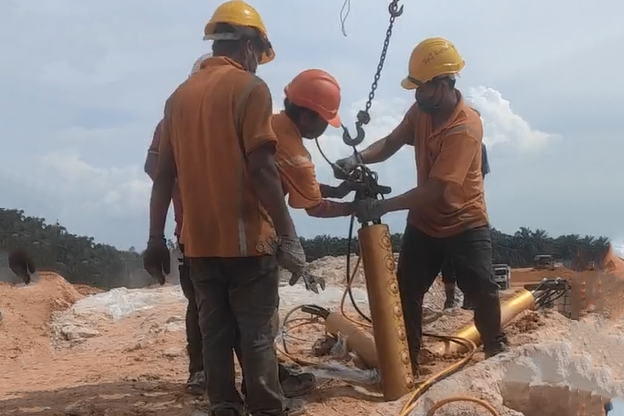
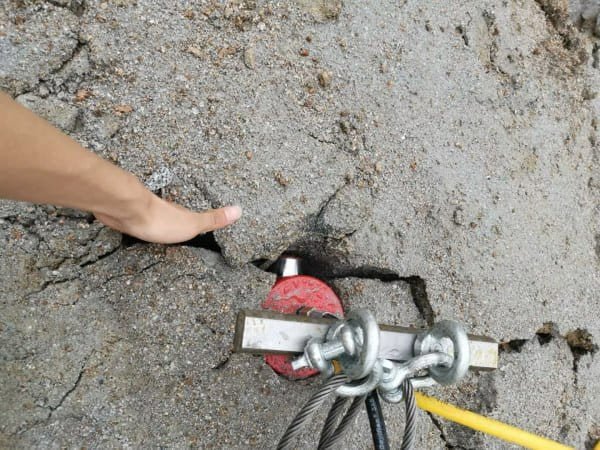
A piston rock splitter is a hydraulic rock-breaking device that uses piston-driven force inside pre-drilled holes to split rock from within1. It is a non-explosive option for suitable hard-rock excavation, quarrying, and clearance work, but its efficiency depends on rock conditions, drilling layout, hydraulic power matching, and site organization.
In customer selection discussions, I often see one question turn into several better questions. The buyer first asks, “What is it?” Then we need to ask, “Will it fit my rock type, hole spacing, working face, operator workflow, and project scale?”
How Does a Piston Rock Splitter Work?
A piston rock splitter looks simple from the outside, but the working result depends on a controlled system. If the hole is poorly drilled or the power unit is mismatched, even a strong splitter can disappoint the buyer. That is why I always start with the working principle.
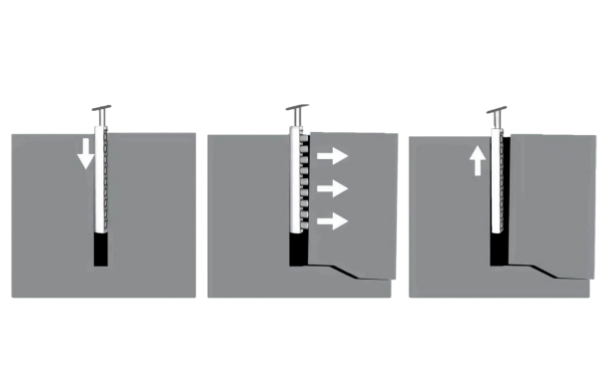
A piston rock splitter works by placing a splitting rod into a pre-drilled hole. A high-pressure hydraulic pump sends oil into the internal cylinder. The piston movement creates outward splitting force, which expands cracks inside the rock and separates it along weaker tensile paths.
Main Components
A typical hydraulic piston-type splitting system has two major parts:
| Component | Function | Buyer Evaluation Point |
|---|---|---|
| Hydraulic power station | Converts mechanical energy into hydraulic energy | Electric or diesel drive, pressure stability, service access |
| Piston splitting rod | Enters the drilled hole and applies internal splitting force | Diameter, length, sealing quality, piston structure |
| High-pressure oil hoses | Transfer hydraulic oil to and from the rod | Pressure rating, joint quality, safety protection |
| Control system | Manages pressure and operating cycle | Ease of use, reliability, operator training |
In many equipment discussions, buyers ask me first about “tons of force.” I understand why. The number looks clear. However, rock does not break only because a catalog lists a large force rating. Rock breaks when internal tensile failure2 develops in the right direction.
Rock usually has much weaker tensile strength than compressive strength.3 This is the basic reason a splitter can work inside a drilled hole. The tool applies internal expansion force. The rock then cracks along a plane influenced by:
- natural bedding or joint direction;
- hole depth and straightness;
- hole spacing and row layout;
- free face availability;
- rock hardness and integrity;
- the number of splitters working together.
Some hydraulic systems use ultra-high pressure oil, often in the range of 120–150 MPa, depending on design. A single splitting cycle may take about 30–120 seconds under suitable operating conditions. These figures are useful for initial screening, but I do not treat them as guaranteed production data. Actual output changes with drilling speed, rock structure, rod quantity, loading method, and crew coordination.
In my experience as a manufacturer/exporter, the best procurement conversations do not stop at pressure and force. They connect equipment parameters with drilling plans and site workflow.
When Is a Piston Rock Splitter Suitable?
A piston rock splitter is suitable when a project needs controlled, non-explosive rock breaking and the site can support drilling, hydraulic power operation, and planned splitting cycles. It is not automatically the best answer for every rock mass or production target.
A piston rock splitter is commonly considered for quarry blocks, trench excavation, tunnel or foundation clearance, mining secondary breaking, and restricted construction areas. It is most useful when vibration, fly rock, explosive permits, or noise control make blasting difficult4, but drilling access is still practical.
Good-Fit Conditions
I usually see stronger application fit when the site has:
-
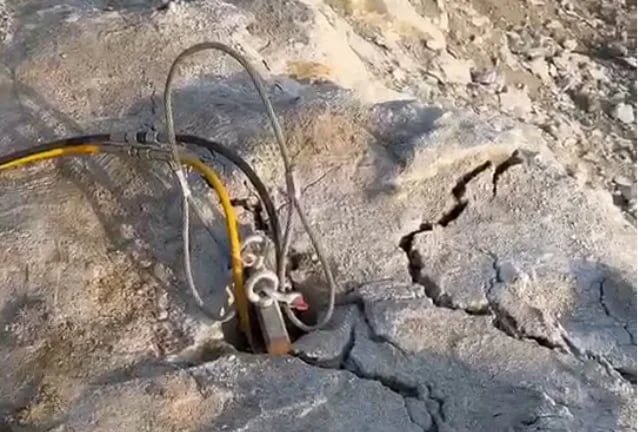
A workable free face
Rock needs space to separate. If the rock is fully confined, splitting may be slower or require more staged work. -
Consistent drilling quality
Hole diameter, depth, and straightness must match the splitting rod. Poor drilling reduces contact and crack direction control.5 -
Reasonable hole spacing
Spacing that is too wide can leave unbroken rock. Spacing that is too tight can waste drilling time. -
Clear production organization
The crew should coordinate drilling, splitting, mucking, and repositioning. The splitter alone does not determine daily output. -
Suitable rock structure
Jointed or layered rock may split differently from massive, highly intact rock. This can be good or bad depending on the desired break pattern.
Caution Points for Buyers
I advise procurement teams not to assume that a piston rock splitter can always replace blasting. Blasting can still be more economical in some large, open, permitted mining operations. Static splitting becomes more attractive when the project values control, lower vibration, reduced fly rock risk, or operation in sensitive areas.
Some suppliers may state high daily capacity, such as 1,000–1,500 cubic meters per day under favorable conditions with multiple rods, efficient drilling, and organized site work. I would treat this as a scenario-based estimate, not a universal promise. A buyer should ask:
- How many splitting rods are included?
- What drilling rig capacity is assumed?
- What hole depth and spacing are used in the estimate?
- What rock type is the estimate based on?
- How many operators are required?
- How is broken rock removed after splitting?
For large procurement projects, I recommend a written technical selection sheet. It should include rock photos, compressive strength if available, bench height, hole diameter, expected output, power source, working shift hours, and local service requirements. This helps the supplier propose a realistic configuration instead of only quoting the biggest model.
How Is a Piston Rock Splitter Different from Other Hydraulic Rock Splitters?
A piston rock splitter is part of the wider hydraulic rock splitting equipment category, but it should not be merged into one vague group. The piston-driven structure, splitting rod design, hole requirements, and work rhythm can differ from handheld wedge splitters or integrated drilling-splitting machines.
The main difference is that a piston rock splitter uses hydraulic piston movement inside a splitting rod to create high internal splitting force in a drilled hole. Other hydraulic splitters may use wedge sets, handheld cylinders, or machine-mounted systems. The right choice depends on access, hole size, production target, and rock conditions.
Practical Comparison
| Equipment Type | Typical Use | Strength | Limitation |
|---|---|---|---|
| Handheld hydraulic rock splitter | Small-scale demolition, secondary breaking, confined spaces | Portable and flexible | Lower output for large rock volumes |
| Piston rock splitter | Hard-rock splitting through drilled holes | Strong internal splitting force and scalable rod quantity | Needs proper drilling and power matching |
| Integrated drilling-splitting machine | Projects needing drilling and splitting in one workflow | Higher mechanization | Higher investment and site access requirements |
| Gas expansion rock breaking system | Non-explosive expansion breaking | Useful where hydraulic splitting is not ideal | Requires strict process control and compliance review |
I avoid saying one type is always “better.” A small contractor with narrow access may prefer handheld splitters. A quarry with repeated hard-rock splitting may evaluate piston-type systems. A large engineering project may need drilling rigs, splitting units, loaders, and a full production plan.
What Procurement Teams Should Verify
Before choosing a piston rock splitter, I suggest checking both equipment and supplier capability.
Equipment checks:
- rated working pressure and safety margin;
- splitting rod diameter and length options;
- seal quality and spare parts availability;
- hydraulic hose pressure rating;
- pump station drive type, electric or diesel;
- number of rods supported by one power unit;
- maintenance requirements and operator training.
Supplier checks:
- ISO 9001 certificate document;
- CE certificate document where required;
- export packaging and shipping experience;
- ODM customization ability;
- spare parts lead time;
- technical drawing and manual quality;
- after-sales support process.
As Meiger Machinery, we manufacture and export static-hydraulic rock-breaking equipment and gas expansion rock breaking systems. In our inquiry work, I often see buyers compare only price and force. That is understandable during early sourcing, but it is not enough for a stable procurement decision. A stronger evaluation compares the complete breaking method.
For example, a mine owner may need high output. The real bottleneck may be drilling speed, not splitting force. An engineering contractor may work near buildings. The key issue may be vibration control and predictable crack direction. A rental company may care most about durability, spare parts, and simple operation because different crews will use the machine.
That is why I encourage buyers to describe the job before selecting the model. The better the site information, the better the equipment match.
Frequently Asked Questions
Can a piston rock splitter replace blasting?
A piston rock splitter can replace blasting in some suitable rock-breaking tasks, especially where explosives are restricted or vibration control matters. However, it cannot always replace blasting. Rock type, project volume, free face, drilling cost, and production schedule must be evaluated before making that decision.
What drilling hole does a piston rock splitter need?
The required hole diameter and depth depend on the splitting rod model. In general, the hole must be straight, clean, and matched to the rod size. Poor drilling can reduce splitting efficiency, damage tools, or cause unstable crack direction.
Is splitting force the most important specification?
Splitting force is important, but it is not enough. I would also check hydraulic pressure, rod size, pump matching, drilling layout, hole spacing, rock structure, cycle time, spare parts, and operator workflow. Real performance comes from the full system.
How fast does a piston rock splitter work?
A single splitting cycle may take about 30–120 seconds under suitable conditions. Actual production depends on drilling speed, number of rods, rock hardness, hole spacing, crew skill, and muck removal. Buyers should ask suppliers what assumptions are behind any output estimate.
What should I send to a supplier for model selection?
I suggest sending rock photos, rock type, bench height, hole diameter preference, expected output, working hours, available power source, site access limits, and target market compliance needs. If possible, include compressive strength data and drawings of the working face.
Conclusion
A piston rock splitter is a hydraulic, non-explosive rock-breaking tool that splits rock from inside pre-drilled holes. I would not judge it by force rating alone. The better question is whether the complete solution fits your rock, drilling plan, hole spacing, hydraulic power unit, and site workflow. If you are evaluating static rock-breaking equipment for mining, quarrying, construction, or rental fleets, contact Meiger Machinery with your site details. I can help you review the configuration and supplier-selection points before procurement.
"How do you quietly split a rock in half? This hydraulic splitter ...", https://www.facebook.com/interestingengineering/posts/how-do-you-quietly-split-a-rock-in-half-this-hydraulic-splitter-slips-easily-int/1452826506888782/. A technical geotechnical or construction-engineering source defines hydraulic rock splitters as devices inserted into drilled holes to apply internal hydraulic force and split rock or concrete. Evidence role: definition; source type: education. Supports: The source should define hydraulic rock splitters as non-explosive tools that are inserted into drilled holes and apply internal force to split rock or concrete.. ↩
"Research on Splitting-Tensile Properties and Failure ... - PMC", https://pmc.ncbi.nlm.nih.gov/articles/PMC9605434/. Studies of borehole expansion and hydraulic rock splitting describe crack initiation as a tensile-failure process caused by stresses around the drilled hole, supporting the mechanism described here rather than any specific product rating. Evidence role: mechanism; source type: paper. Supports: The source should explain that borehole expansion or hydraulic splitting induces tensile stresses that initiate and propagate cracks in rock.. Scope note: The evidence supports the fracture mechanism, not the performance of a particular splitter model. ↩
"(PDF) Intact rock strength", https://www.academia.edu/17943919/Intact_rock_strength. Geomechanics literature reports that intact rocks typically exhibit tensile strengths far below their uniaxial compressive strengths, which explains why tensile cracking can be exploited by internal splitting tools. Evidence role: mechanism; source type: paper. Supports: The source should document that rocks commonly have tensile strengths substantially lower than compressive strengths.. ↩
"Blast Area Security: Flyrock Safety", https://www.govinfo.gov/content/pkg/GOVPUB-HE20-PURL-LPS92239/pdf/GOVPUB-HE20-PURL-LPS92239.pdf. Government safety and blasting guidance identifies flyrock, ground vibration, airblast or noise, and regulatory controls as significant considerations in explosive rock blasting, supporting why non-explosive methods may be selected in constrained sites. Evidence role: general_support; source type: government. Supports: The source should document that blasting involves regulated hazards or constraints such as vibration, flyrock, noise, and permitting.. ↩
"Investigation of crack propagation patterns on the borehole ...", https://pmc.ncbi.nlm.nih.gov/articles/PMC12775489/. Research on borehole-induced rock fracture shows that hole geometry, spacing, and orientation influence stress concentration and crack propagation paths, supporting the operational importance of accurate drilling. Evidence role: mechanism; source type: paper. Supports: The source should show that borehole geometry, spacing, and orientation affect stress concentration and crack propagation in rock splitting.. Scope note: The evidence supports the physical relationship and may not specify every commercial splitter design. ↩